

Description
Product Overview
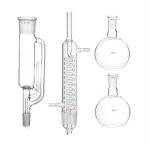
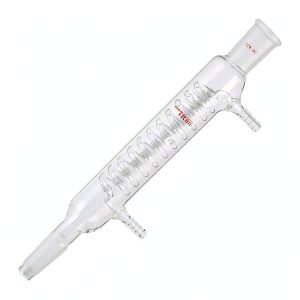
![[Product front view showing all components]](https://www.homebiz.store/wp-content/uploads/2026/07/f0ba6e860975430f8d0ca8cdfb700a04.jpg)
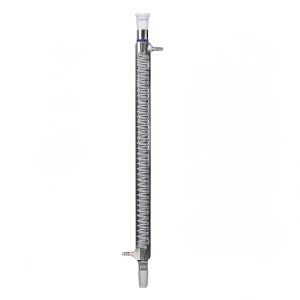
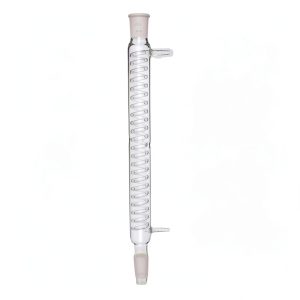
The 4005-300 Borosilicate Graham Condenser from GSC International is engineered for laboratory distillation and reflux applications where reliable cooling and precise temperature control are essential. Constructed from high‑grade borosilicate glass, the condenser offers superior thermal resistance, chemical durability, and clear visibility of the internal fluid flow. Its 300 mm jacket length provides an extended cooling surface, while the inner coil design maximizes heat exchange efficiency, reducing reflux loss and improving overall process yield.
Designed with standard 24/40 ground glass joints, this condenser integrates seamlessly with a wide range of laboratory glassware, including round‑bottom flasks, adapters, and receiving vessels. The ground joints ensure a leak‑free, airtight seal that can withstand repeated assembly and disassembly without compromising performance. The model 4005-300 is dimensioned at 1.25 × 3 × 17 inches and weighs only 7.04 oz, making it compact enough for benchtop setups while delivering professional‑grade functionality.
Usage
In organic synthesis labs, the Graham condenser is frequently employed to condense vapors back into liquid during reflux, allowing reactions to proceed at elevated temperatures without loss of solvent. Its robust construction tolerates continuous operation for extended periods, making it ideal for both small‑scale experiments and larger batch processes. The condenser’s efficient cooling capacity also supports simple distillation setups, where rapid condensation of volatile components is required to achieve high purity fractions.
The device is equally suitable for educational environments, where students learn fundamental techniques such as simple distillation, fractional distillation, and reflux. Its transparent glass body allows clear observation of phase changes, fostering a deeper understanding of thermodynamic principles. Additionally, the condenser can be paired with standard laboratory water jackets or recirculating chillers, providing flexibility to adapt to various cooling media and temperature requirements.
Why Choose Us
GSC International has a long history of supplying high‑quality laboratory glassware, and the 4005-300 Graham Condenser reflects that commitment to excellence. Each unit undergoes rigorous quality control inspections, including pressure testing and visual inspection for glass integrity, to guarantee that customers receive a product free from defects. The use of premium borosilicate glass ensures resistance to thermal shock, allowing the condenser to endure rapid temperature changes without cracking.
Beyond the product itself, GSC offers responsive technical support and a comprehensive warranty that covers manufacturing defects for a full year. Our knowledgeable customer service team can assist with installation guidance, troubleshooting, and recommendations for compatible accessories, ensuring that laboratories can maintain uninterrupted workflow. Choosing GSC means investing in durability, reliability, and a partner that values scientific progress.
Technical Specifications
The 4005-300 model features a total jacket length of 300 mm, an inner coil diameter of approximately 12 mm, and a wall thickness of 2 mm, providing a balance between mechanical strength and efficient heat transfer. The outer dimensions of 1.25 × 3 × 17 inches allow the condenser to fit comfortably within standard laboratory racks and fume hoods. Its weight of 7.04 oz contributes to easy handling while maintaining stability during operation.
Key specifications include a maximum operating temperature of 250 °C, a pressure rating of 0.2 MPa, and compatibility with standard 24/40 (male) and 40/24 (female) ground glass joints. The condenser is supplied without a water inlet or outlet; users can attach appropriate tubing to connect to a circulating water source. All dimensions are provided in metric and imperial units for global compatibility.
Installation Guide
To install the Graham condenser, first ensure that all glassware components are clean and free of residues. Connect the lower joint of the condenser to the receiving flask using a short ground‑glass adapter if necessary, then attach the upper joint to the distillation head or reflux assembly. Tighten the joints gently by hand; avoid excessive force that could damage the glass. Once assembled, secure the condenser in a stable position using a clamp or stand to prevent movement during operation.
After the condenser is positioned, attach flexible tubing to the inlet and outlet ports, ensuring a snug fit to prevent leaks. Connect the tubing to a water source, adjusting the flow rate to achieve a steady stream of cooling water through the jacket. Verify that the water exits the condenser without obstruction, and check for any signs of condensation leakage before commencing the experiment. Proper installation reduces the risk of breakage and enhances cooling efficiency.
Maintenance & Care
Routine maintenance of the Graham condenser extends its service life and preserves performance. After each use, flush the interior with distilled water to remove residual chemicals, then allow the glass to air dry or gently wipe with a lint‑free cloth. Inspect the ground glass joints for signs of wear, such as scratches or chips, and replace any damaged components promptly to maintain a secure seal.
For deep cleaning, immerse the condenser in a mild alkaline solution, such as a diluted laboratory detergent, and gently agitate to dislodge stubborn deposits. Rinse thoroughly with deionized water to eliminate any cleaning agent residues, then dry completely before storage. Store the condenser in a protective case or padded container to guard against impact and avoid stacking heavy items on top of it.
Key Features
- High‑grade borosilicate glass delivers excellent thermal resistance and clear visibility.
- Ground glass 24/40 joints provide a leak‑free, airtight connection for versatile setups.
- Extended 300 mm jacket length enhances cooling efficiency and reduces reflux loss.
- Compact size and lightweight design simplify bench placement and handling.
- GSC International offers dedicated technical support and a one‑year warranty for peace of mind.
FAQ
What type of cooling water flow is recommended for optimal performance?
A steady, moderate flow of room‑temperature water through the condenser jacket is ideal. The flow should be sufficient to keep the outer glass surface wet at all times without creating turbulence that could disturb the internal coil. Typically, a flow rate of 0.5 to 1.0 L min⁻¹ provides effective cooling for most laboratory applications.
Can the condenser be used with a recirculating chiller instead of a simple water bath?
Yes, the Graham condenser is compatible with recirculating chillers. Connect the inlet and outlet tubing to the chiller’s circulation loop, ensuring that the chiller is set to a temperature that matches the desired cooling level. Using a chiller can improve temperature stability and reduce water consumption compared to a traditional water bath.
How do I replace a damaged ground glass joint on the condenser?
If a joint becomes cracked or chipped, discontinue use immediately. Contact GSC International for a replacement part; the company can provide a matching ground glass joint or a complete replacement condenser. Installation of the new joint should follow the same careful hand‑tightening procedure used for the original component.
Is the condenser compatible with standard laboratory adapters for different joint sizes?
Absolutely. The 24/40 ground glass joints are a common standard, and a variety of adapters are available to convert to other sizes such as 20/22 or 28/32. Using the appropriate adapter allows the condenser to integrate with a broader range of apparatuses while maintaining a secure, leak‑free connection.
Reviews
There are no reviews yet.