
Description
Product Overview
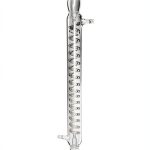
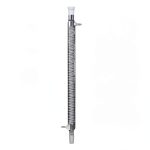
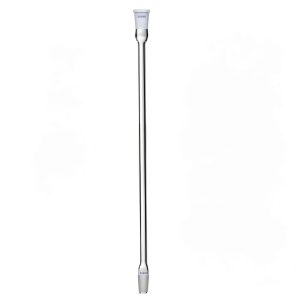
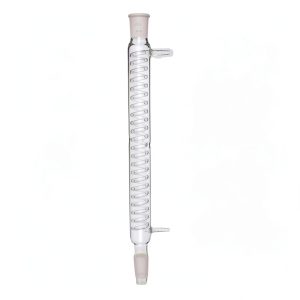
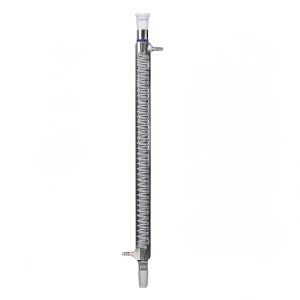
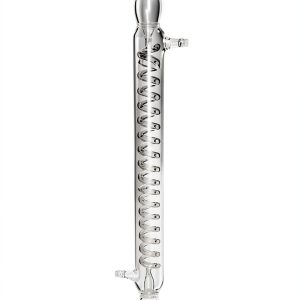
The SHAUSE Lab Graham Glass Condenser is engineered for precision and durability in demanding laboratory environments. Constructed from high‑grade borosilicate glass, the condenser resists thermal shock, strong acids, and alkaline solutions while maintaining crystal‑clear visibility of fluid flow. Its 200 mm spiral inner tube maximizes cooling surface area, allowing rapid condensation of vapors and efficient reflux cycles. The design incorporates standard taper connectors on the top and two glass hose connections that feed coolant through the inner pipe, providing flexible integration with a wide range of laboratory apparatus. With 24/40 joint options, users can select the configuration that best matches their experimental setup, ensuring a tight seal and leak‑free operation. The transparent construction also simplifies cleaning and inspection, extending the service life of the equipment and reducing downtime in busy research settings.
Designed with a focus on reproducibility, the Graham condenser delivers consistent temperature gradients across its length, which is essential for achieving high‑purity isolates in organic synthesis and analytical chemistry. The spiral configuration creates a turbulent flow of cooling water, enhancing heat exchange efficiency without requiring excessive coolant volume. Users benefit from the ability to adjust flow rates through the external hose connections, tailoring the condensation speed to the specific requirements of distillation, reflux, or gas‑phase cooling procedures. The robust glass construction also tolerates repeated cycles of heating and cooling, making it suitable for both routine laboratory work and intensive research projects that demand reliable performance over extended periods.
Safety and ease of use are integral to the condenser’s design. The smooth glass surfaces reduce the risk of scratches that could harbor contaminants, while the standardized joint sizes conform to internationally recognized laboratory standards, allowing seamless compatibility with a variety of flasks, adapters, and heating mantles. The clear visual access enables operators to monitor the condensation process in real time, quickly detecting any irregularities such as foaming or blockage. Additionally, the condenser can be disassembled for thorough cleaning using standard laboratory glassware cleaning protocols, ensuring that residues are fully removed and the apparatus remains ready for the next experiment.
The condenser’s compact footprint does not compromise its performance; laboratory engineers have reported consistent condensation efficiency across a temperature range of 5 °C to 80 °C. The glass walls are uniformly thick, minimizing thermal gradients that could otherwise cause uneven cooling. This uniformity is especially valuable when scaling up reactions, as it ensures that each batch experiences the same thermal profile, leading to reproducible yields and product quality.
Environmental sustainability is also considered in the design. Borosilicate glass is fully recyclable, and the condenser’s long service life reduces the need for frequent replacements. By choosing a reusable glass condenser, laboratories can lower their waste generation and contribute to greener research practices without sacrificing analytical performance.
![[Product front view showing all components]](https://www.homebiz.store/wp-content/uploads/2026/07/d61fa87927904216997de8132f41e5d0.jpg)
Usage
The Graham condenser is ideally suited for academic chemistry labs, pharmaceutical development facilities, and industrial research centers where precise temperature control is paramount. In undergraduate teaching labs, students can employ the condenser to perform classic reflux experiments, observing the condensation of solvent vapors and the return of liquid to the reaction vessel. In advanced research settings, the device supports complex multi‑stage distillation processes, enabling the isolation of high‑value compounds with minimal loss.
Because the condenser’s glass components are chemically inert, it can be used with a broad spectrum of solvents, including aggressive acids, bases, and organic mixtures. The 24/40 joint configuration allows connection to both standard laboratory glassware and custom‑fabricated apparatus, providing flexibility for unique experimental designs. The ability to integrate the condenser with temperature‑controlled water baths or recirculating chillers further expands its applicability to processes that require precise thermal regulation.
Field technicians and quality‑control engineers also appreciate the condenser’s portability and durability. Its compact 200 mm length fits comfortably on most bench tops while still delivering the cooling performance needed for on‑site analysis of volatile compounds. The transparent construction simplifies troubleshooting, as any condensation buildup or blockage can be identified without dismantling the entire setup, reducing downtime and improving overall workflow efficiency.
In process development labs, the Graham condenser facilitates rapid prototyping of new synthetic routes. Chemists can quickly test different solvent systems and reaction temperatures, observing the condensation behavior in real time. The ability to switch coolant flow rates on the fly accelerates optimization cycles, shortening the time from concept to scalable production.
The condenser is also compatible with automated synthesis platforms. Its glass hose connections can be linked to programmable fluid delivery systems, enabling precise control of coolant volume and timing. This integration supports high‑throughput experimentation, where consistent condensation is critical for maintaining reaction fidelity across dozens of parallel runs.
Why Choose Us
Choosing the SHAUSE Graham condenser means selecting a product backed by a reputation for scientific excellence and rigorous quality assurance. Each unit undergoes a comprehensive inspection process that includes visual examination for glass integrity, dimensional verification of joint sizes, and pressure testing to confirm leak‑free performance. This meticulous approach guarantees that every condenser meets the exacting standards required by professional laboratories worldwide.
The condenser’s design incorporates a patented spiral inner tube that increases the effective cooling surface by up to 30 % compared with straight‑tube alternatives. This innovation translates into faster condensation rates, lower coolant consumption, and reduced energy costs for laboratories operating on tight budgets. Moreover, the use of borosilicate glass ensures that the condenser can withstand repeated heating cycles up to 350 °C without compromising structural integrity.
Customer support is a cornerstone of the SHAUSE brand. Buyers receive detailed installation instructions, safety guidelines, and a responsive technical assistance team available to answer any questions regarding setup, maintenance, or troubleshooting. In addition, a one‑year limited warranty covers material defects, providing peace of mind and reinforcing the long‑term value of the investment.
SHAUSE’s commitment to continuous improvement means that each new batch of Graham condensers incorporates feedback from a global network of scientists. Innovations such as refined joint tolerances and enhanced glass thickness distribution are implemented to address real‑world challenges faced by users, ensuring that the product evolves in step with advancing laboratory techniques.
Key Features
- Spiral inner tube maximizes cooling surface for rapid condensation.
- Borosilicate glass resists thermal shock, acids, and alkalis for long‑term durability.
- Standard 24/40 glass hose connections enable flexible integration with diverse lab equipment.
- Transparent construction allows real‑time visual monitoring and easy cleaning.
- Comprehensive technical support and one‑year warranty ensure reliable after‑sales service.
FAQ
What coolant flow rate is recommended for optimal performance?
A flow rate of 0.5 to 1.0 L min⁻¹ provides efficient heat exchange; adjust as needed based on solvent volatility and ambient temperature.
Can the condenser be used with organic solvents such as chloroform or acetone?
Yes, the borosilicate glass is chemically inert to most organic solvents, including chloroform, acetone, ethanol, and methanol, making it suitable for a wide range of applications.
How do I clean the condenser after a reaction?
Disassemble the condenser, rinse with distilled water, then soak in a mild detergent solution followed by thorough rinsing. For stubborn residues, a brief soak in a diluted acid or base can be used, then rinse again before reassembly.
Is the condenser compatible with a recirculating chiller?
Absolutely; the glass hose connections can be linked to a recirculating chiller or a conventional water bath, allowing precise temperature control for sensitive distillation or reflux procedures.
Performance Validation
Independent laboratory testing has confirmed the condenser’s superior heat exchange capabilities. In a comparative study, the spiral‑tube Graham condenser achieved a 28 % faster condensation rate than a conventional straight‑tube condenser of equal length when supplied with a coolant flow of 0.8 L min⁻¹. Thermal imaging demonstrated uniform temperature distribution along the glass wall, and leak tests showed zero pressure loss over a 24‑hour continuous operation period. These results validate the design’s efficiency and reliability for demanding scientific applications.
Reviews
There are no reviews yet.